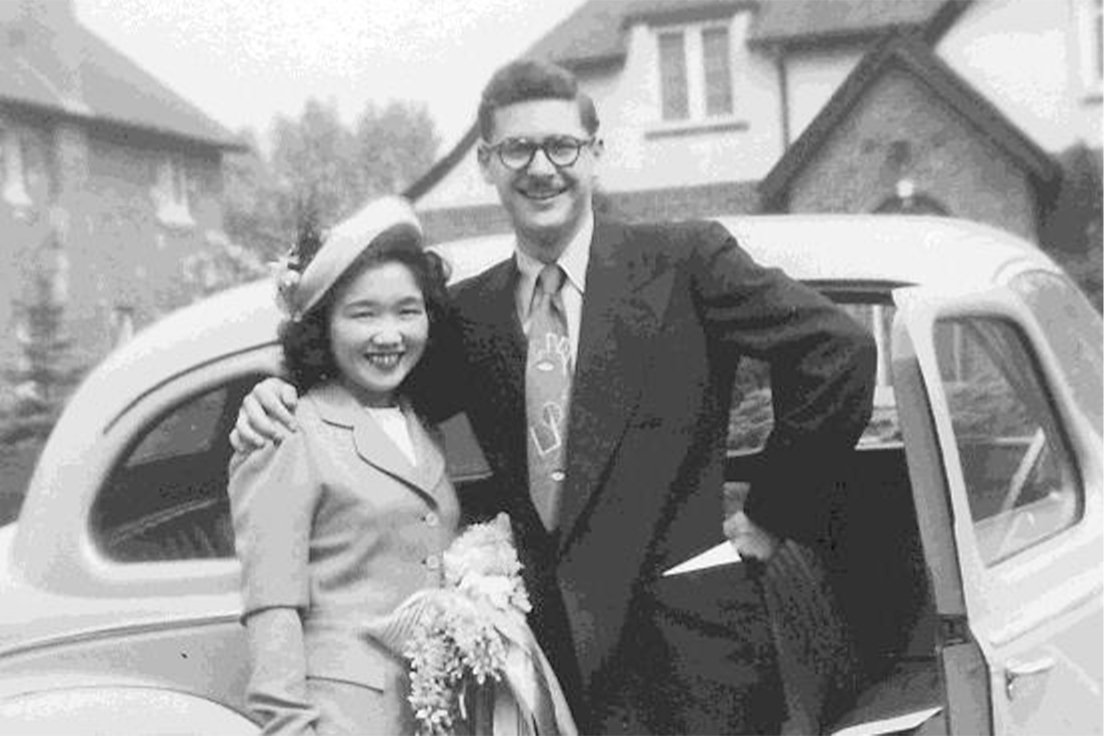
“Put me on the ice floe,” my mother often said, referring to the Inuit legend of senicide, to which I would always reply, “I can’t – they’ve all melted.” Sometimes she would say, “Take me up the mountain,” the Japanese version, ubasute, reflecting her Japanese roots, in which it’s the child’s filial obligation to carry the aged parent up the mountain to die, and I would reply, “I’m too old to carry you!” My brilliant mother, who fell apart in slow motion, would joke about this, until the end of her life, when it was no longer quite so funny.1
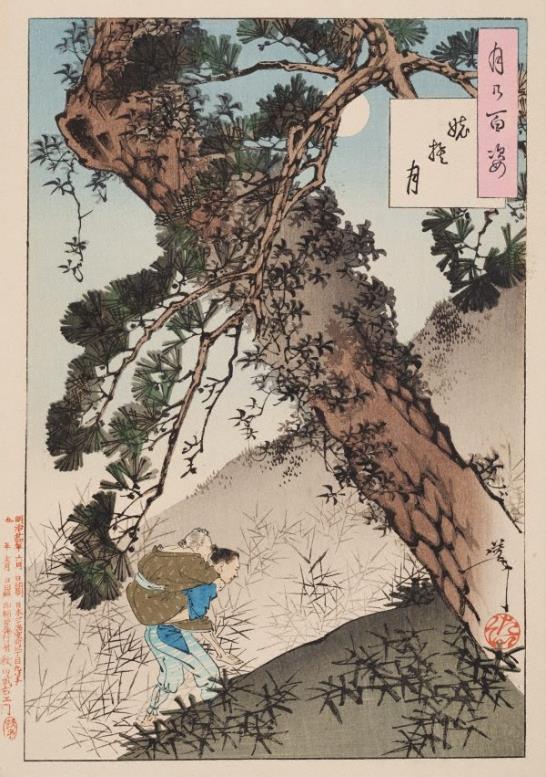 My much more pragmatic father swore that a slow wasting away would not happen to him. He watched my mother falling apart, and it reminded him, too clearly, of his own mother, who was continually revived after several strokes and heart attacks, returning each time missing more bits, until she was a mere echo, a tiny sliver, of her real self. He, the dutiful son, would visit her weekly, but would describe her as, “The world’s oldest living vegetable,” a way, I think, in retrospect, to assuage the hurt of seeing her, “sans teeth, sans eyes, sans taste, sans everything.”
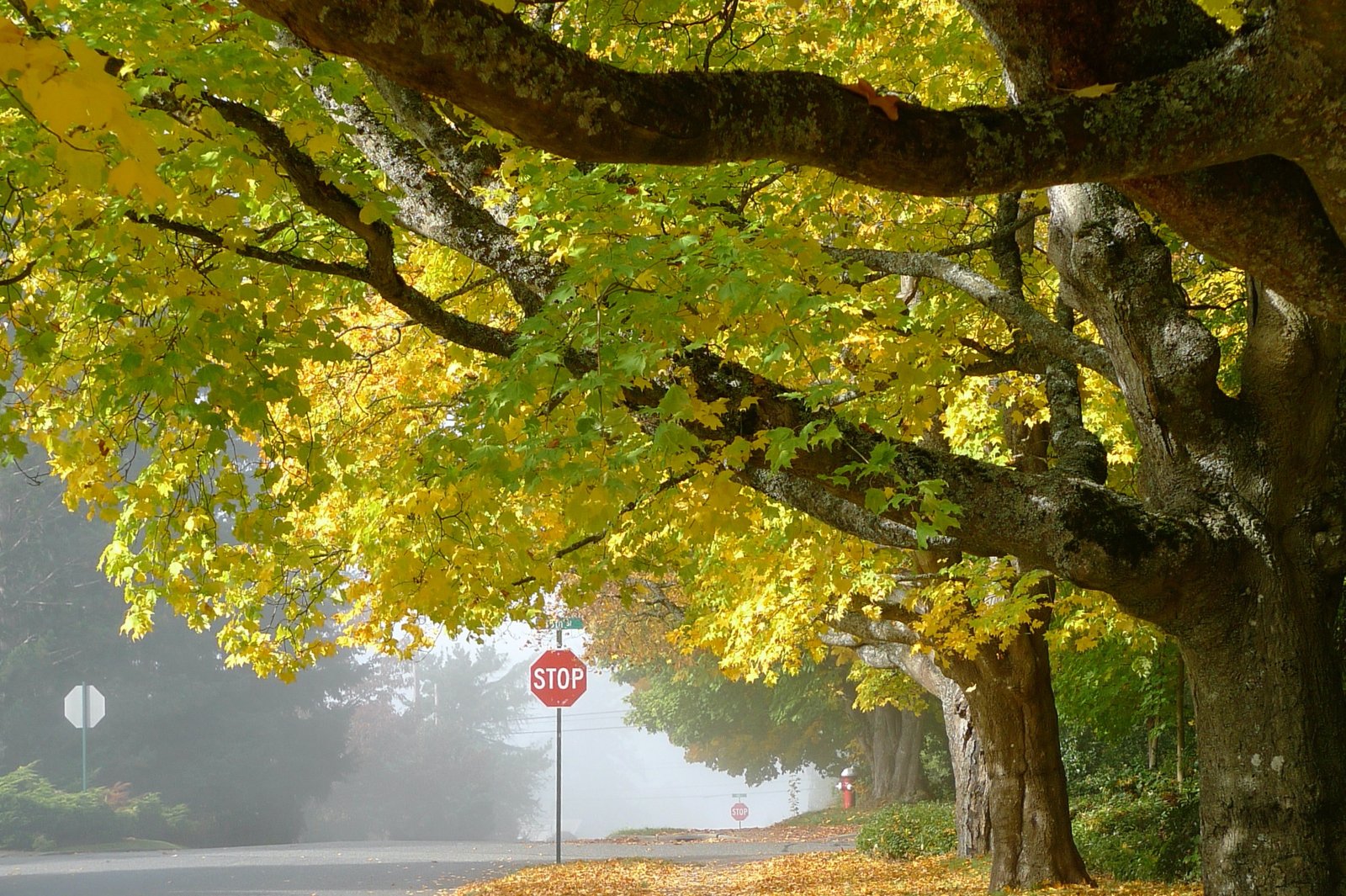
I’m a hospice volunteer, and a counselor who is particularly interested in death and dying, grief and bereavement. I would like to die naturally, lying down under my precious old American elm, or beside one of the wild and beautiful rivers where I live, in Washington State, but the statistics tell us that the majority of Americans die in hospitals, or nursing homes,2 and the figures in Canada appear to be similar.3 However, to be able to choose the time of your death also allows you to choose the place of your death, within reason. I don’t suppose I could get a doctor and nurse to bring their equipment out to a river, but I might have more luck terminating my life on my deck, under the branches of the elm (though we are not yet fortunate enough to have the Canadian version of Medical Assistance in Dying here, where we still have to be able to swallow the pills, something many people cannot do at the end of life).
Of course, by the time we get to that point, we really might not care where or how, since we already have one foot in the next world. Maybe it’s only while we’re still vibrantly living that we care about the time and place of our deaths. We can write elaborate death plans, stipulating the music to be played, and who and what should be in the room, but perhaps, at the very end of life, it is of no real matter.
 Regardless, my mother chose to die in the corner of the enormous 8′ Danish Modern couch she had bought in 1962, and where she spent the last two years of her life, a tiny person, tucked into that corner. There was no music, just Dad and I, holding her hands, with me telling her we loved her as she swiftly glided away from us, slipping off as easily as a sigh. There was a sense of a circle of love that enveloped and affected everyone in the room, not just Dad and myself, but also the doctor, the two attending nurses, Mom’s carer for the last year of her life, and one of the retirement home nurses who stood respectfully at the back of the room. After she died the carer and I worked hard to lay her down on the sofa (it’s not called a dead weight for nothing, and Mom would have been amused by being one and still causing me problems even after departing), and washed her face and hands and legs, the only parts that were easily accessible. I tied together the yellow tulips I had bought for her to enjoy, for the last few days of her life, which had slowly opened over those days as she had slowly faded, and placed them on her chest, an offering to accompany her to the afterlife, a ritual that is as old, perhaps, as humans. I pulled up a chair and sat with her for a couple of hours, before the funeral workers came to take her body away. I have seen families be very quick to remove the body, but I believe that, in sitting with the body, you can begin to heal your grief. There’s an important component to becoming detached, that starts when you begin to understand that this person (who you don’t really recognize any more, as their face settles into death), is really, really gone. There is something to be said for laying out the body in the coffin, on the parlour table, and letting it stay there for a couple of days, as was so common, a century ago. Everyone gets to spend some time with the person, to speak to them in private, to weep and beat their breasts, to confess regrets, to remember when, to whisper love, to promise to do better. This is where the healing begins.
After she died, between his copious tears, my father thanked the doctor, and said he’d be seeing her soon, when it was his time. That turned out to be prophetic; ten months later he suddenly became very ill with pancreatic cancer and immediately contacted the same doctor, telling her the situation and stating that he wanted MAiD soon. It was in the middle of Covid, and I fought my way over the border and through all the cruel bureaucracy that kept the living and dying apart for more than a year. I rented an apartment hotel in downtown Toronto, where Dad and I quarantined together for his last 10 days. We were alone, with little help from the outside world. He made a valiant attempt to survive the cancer long enough to get out of quarantine so he could return to his apartment with me, and finish the few details that were still niggling at him, but it was not to be. When he realized he was suddenly at the end of his long run, he made the decision to end his life as soon as he could, rather than wait around. A few days later it was just Dad and me, and our friendly doctor, and the same nurse, about to “do the deed,” as Dad always referred to the MAiD process. Like my mother before him, I held his hand and told him I loved him. And then it was just us in the quiet of that stark and sterile apartment. Dad was almost naked, lying on a hospital bed. I bathed his very old but still beautiful body in the old fashioned way of lovingly caring for the dead. I removed his rings and the chain he always wore, with the Hebrew letter chai (life) on it, that he had inherited from my brother, who had died thirty-five years earlier. As I turned him onto his side to wash his back I almost lost him over the side of the bed, and that would have been a terrible oops! because I would not have been able to wrestle him back up onto the bed (dead weight, remember). My father had the same dark sense of humor as my mother – well, I guess we all did – and I could hear him laughing as I snatched him back from the brink. After that, I sat with him, keeping him company, waiting for a few hours until I could bear to let the funeral workers come to collect him. I played music. I filmed him. I kissed his dear sweet head and told him what a wonderful father he had been. I, too, wept copious tears.
I think my parents, Margaret and Ed Lyons, would want people to know how appreciative and relieved they were to be able to choose when to exit the planet, rather than waiting, and waiting, perhaps in pain, perhaps in oblivion, for death. They would say how thankful they were that they did not have to suffer, and that they were treated with respect and kindness every step of the way by the same compassionate doctor who first interviewed them, then guided them through the process and was there to help them at the very last moments of their lives. And though I do not have the words to tell you how brokenhearted I was, and still am, to lose both my parents within ten months of each other, I can definitely say how grateful I was to be there with them, and to hold their hands, as they each began their final journey.
To be with someone as they are dying is perhaps the hardest thing we will ever do; it hurts like nothing else, it breaks your heart into jagged shards, but it’s also a precious gift and an honor to be completely present with those we love as they leave everything behind and sail away into uncharted territory. We are heartbroken, we are bereft, but that’s only because we love so deeply. At the end of life, love is all there is, and love is just enough.
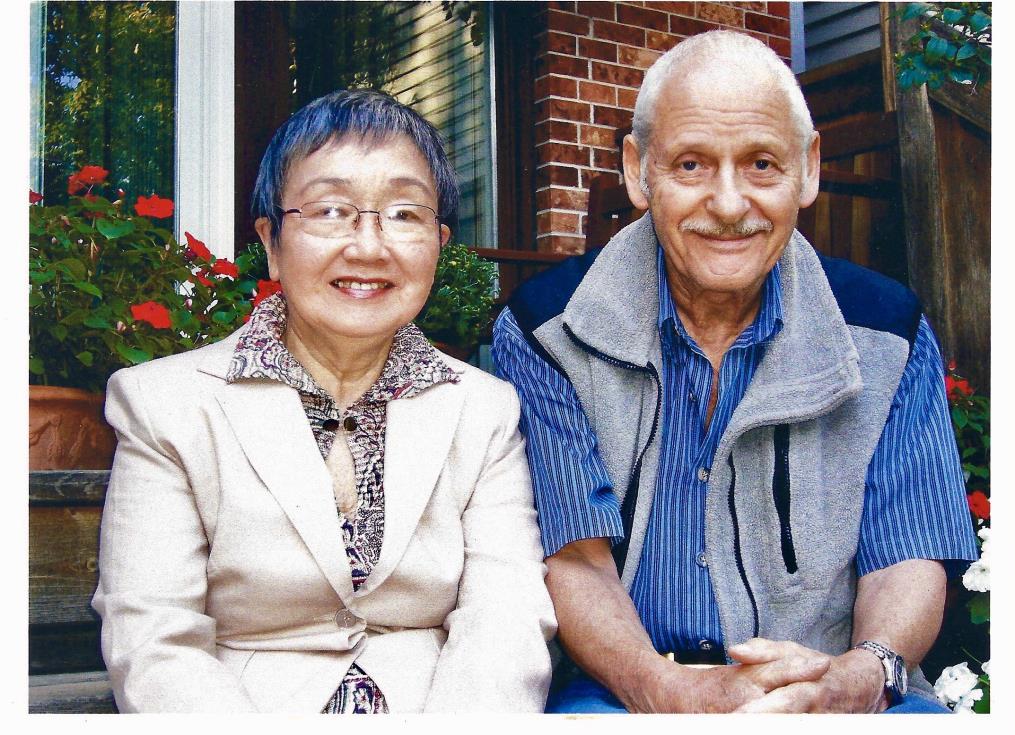
Footnote: Margaret and Ed Lyons
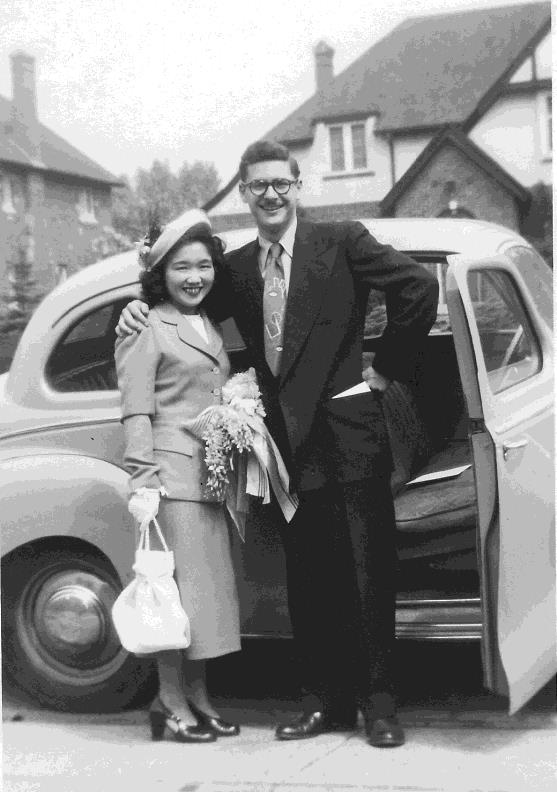
They both had very long and extraordinary lives. Margaret was the oldest child born to a Japanese farm family in Mission, BC, in 1923, whose family lost everything when they were evicted in 1942, due to the War Measures Act. Ed grew up in an interreligious Jewish and Presbyterian family in Hamilton, ON, something that was definitely not done in 1926, when he was born. They met at McMaster University in Hamilton, got married on the day they graduated, in 1949, and sailed to London to see the world. Margaret became a radio producer at the BBC, and Ed got another degree, in statistics, from the London School of Economics, and worked on the design of airplanes. They returned to Canada with their two young children in 1960, where Ed worked for various companies in the marketing and advertising departments, before starting his own advertising company, and Margaret continued her journalism career at CBC Radio, first as a producer, then as program director and eventually as Vice President of English Radio. After 70 years of marriage, Margaret died in October, 2019, at 96, and Ed followed her in August, 2020, at 94.
The CBC created a tribute to Margaret, honoring her role as a force in public broadcasting, that can be seen by clicking the link below.
North American Broadcasters Association: A Tribute to Margaret Lyons
Margaret was appointed a Member of the Order of Canada in 2010 for her contributions as a pioneer for women in public broadcasting.
— Ruth Shizuka Lyons, CC
This article was written at the request of the doctor who helped both my parents, who at that point was the national director of Medical Assistance in Dying, Canada. The piece was published in June, 2021, in the newsletter of Toronto MAiD House.